Field Report · Remote Work
Learn an AI-assisted virtual-assistant workflow you can practice — and eventually offer — from home
Set up right, a small recurring support package could potentially bring in up to $1,500 a month* in extra income — not as a promise, but as a realistic ceiling for someone who treats it like a real service, not a side project. Here is what the workflow actually involves.
* Illustrative and not guaranteed. Actual results depend on effort, skills developed, client demand, and market conditions. See the full Earnings Disclaimer.
The job used to require an office. It doesn't anymore.
A decade ago, "administrative support" meant a desk down the hall. Today, the same core work — managing a calendar, triaging an inbox, keeping files organized, following up on time — happens entirely over email, chat, and shared drives. The skill hasn't changed much. The delivery method has.
What has changed is how many people are looking for exactly this kind of help, and how few of them know how to structure it as a real, boundaried service rather than an open-ended favor.

The shift: from "helping out" to running a service
Most people who try remote support work stall at the same point: they're capable, but they never turn that capability into a structured offer. There's no documented process, no clear scope, no agreed hours, and no plan for what happens when something goes wrong.
The people who make it work treat it less like freelancing and more like running a small operations function — one with defined tasks, access boundaries, and reporting. That's the gap this course is built to close: turning "I'm organized" into a service someone else can rely on and pay for.
What this actually is
Not a certificate, not a community, not a promise of clients. A structured masterclass covering the workflow, the templates, and the boundaries that make remote support work repeatable.
Recorded training
Watch the masterclass at your own pace and revisit any module while you build your own version of each workflow.
Reusable templates
Intake forms, SOP outlines, and reporting formats you adapt to your own service rather than build from scratch.
A practice deliverable
Work through a sample engagement so you finish with a concrete example of your process, not just notes.
A grounded scope
Clear guidance on what to offer, what to decline, and how to set access and confidentiality boundaries from day one.
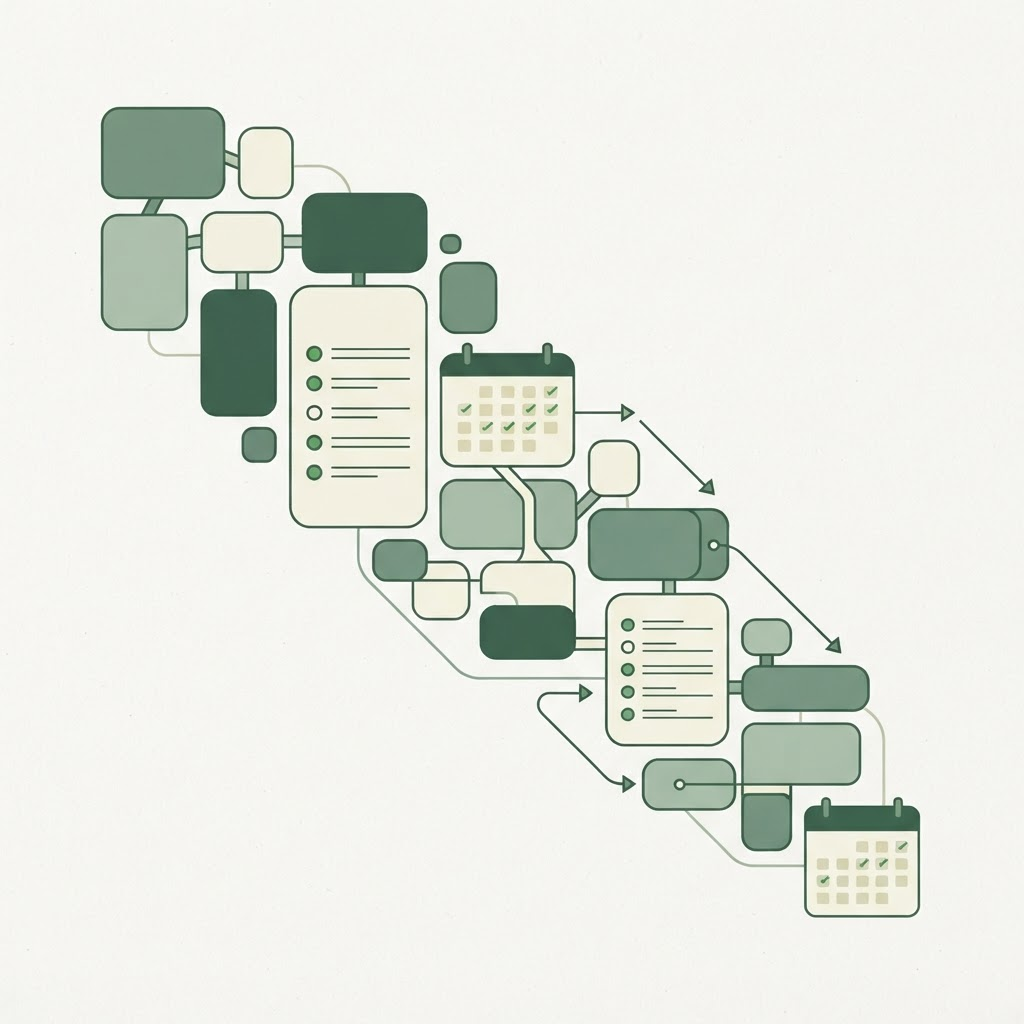
How people actually put this to work
After the training, most people don't launch a full agency overnight. They start with a small, well-defined package — a fixed number of hours or tasks each week, built around one or two workflows they can run confidently: inbox triage, calendar management, or document organization.
From there, they refine the offer, tighten the process documentation, and decide whether to keep it as a flexible extra income stream or grow it into something larger. Either path starts from the same foundation: a workflow you can explain, hand off, and repeat.
A realistic read
What's realistic — and what isn't
This is a genuine, learnable skill, not a guaranteed income stream. Some people take on a small, recurring support package worth a few hundred dollars a month; a smaller share, working consistently and managing more than one client, could potentially reach up to $1,500 a month* over time.
Nobody is handed clients. Finding them, pricing your time, and delivering reliably are on you — this course exists to make that part far less confusing, not to remove it.
* Illustrative and not guaranteed. Actual results depend on effort, skills developed, client demand, and market conditions. See the full Earnings Disclaimer.
Inside the curriculum
Five modules, in the order most people actually need them.
- 01
Remote-work foundations
Set the ground rules for working with clients at a distance — communication norms, tools, and expectations.
- 02
Task intake and prioritization
Turn a scattered inbox of requests into a clear, ordered queue you can actually keep up with.
- 03
Calendar, inbox, and file workflows
Build repeatable routines for scheduling, correspondence, and document organization.
- 04
Standard operating procedures
Document how recurring tasks get done so your work stays consistent and easy to hand off or scale.
- 05
Security, reporting, and service packages
Set access boundaries, report progress clearly, and package your time into an offer clients understand.
Not sure this fits your situation?
Take two minutes to check whether your schedule and goals line up with this kind of work, then tell us what you're hoping to get out of it.
Before you go further
Do I need previous office or admin experience?
No. The course starts from the underlying skills — organization, communication, and follow-through — and builds the workflow structure on top of them.
Will this get me clients directly?
No. The course teaches the workflow, documentation, and boundaries; finding and pricing clients is a separate skill covered at a practical level, not guaranteed for you.
Is the $1,500 figure typical?
It's an illustrative ceiling for a consistent, multi-client setup, not an average or a promise. Read the full earnings disclaimer for the details.